From the very beginning, the duck was never just a logo.
It was personal.
Duckhorn was their name, an old-world family name that evolved over time but always carried its original meaning. For Dan, it meant something more. He was drawn to the outdoors, to the ritual of duck hunting—the patience, the quiet, the connection to place. There’s a story often told from those early days, of a duck traded for a bottle of wine. Simple, generous, and a little unexpected. It captures the spirit of how it all began.
So when the time came to create a label, the choice felt obvious.
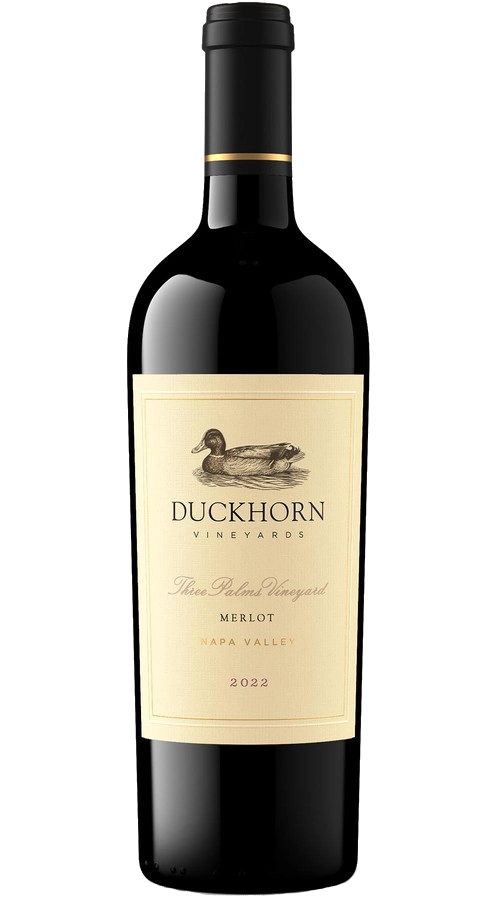
The mallard appeared almost immediately after the winery’s founding, drawn from a vintage illustration. It was elegant, but grounded. It wasn’t designed to signal luxury or stand out on a shelf. It simply reflected who they were.
And over time, it came to mean much more.
From the first vintage in 1978, the duck became a quiet signature, recognized not because it demanded attention, but because it earned it. As Margaret Duckhorn once said, “Maybe it was the timing. Ducks were everywhere then. But from the very beginning, our wines—especially Three Palms—were embraced.”
The symbol endured because it felt authentic. It belonged to the story, not the other way around.
Over the decades, the mallard has been refined with the same care as the wines themselves—each detail sharpened, never to change its meaning, only to express it more clearly.
Today, the duck still reflects the same sensibility it did in the beginning. A connection to nature. A sense of place. A belief that the best things don’t need to be overstated.
In many ways, the duck has grown alongside the winery—not by changing what it stands for, but by staying true to it. A small, timeless reminder that the most meaningful things are often the simplest.